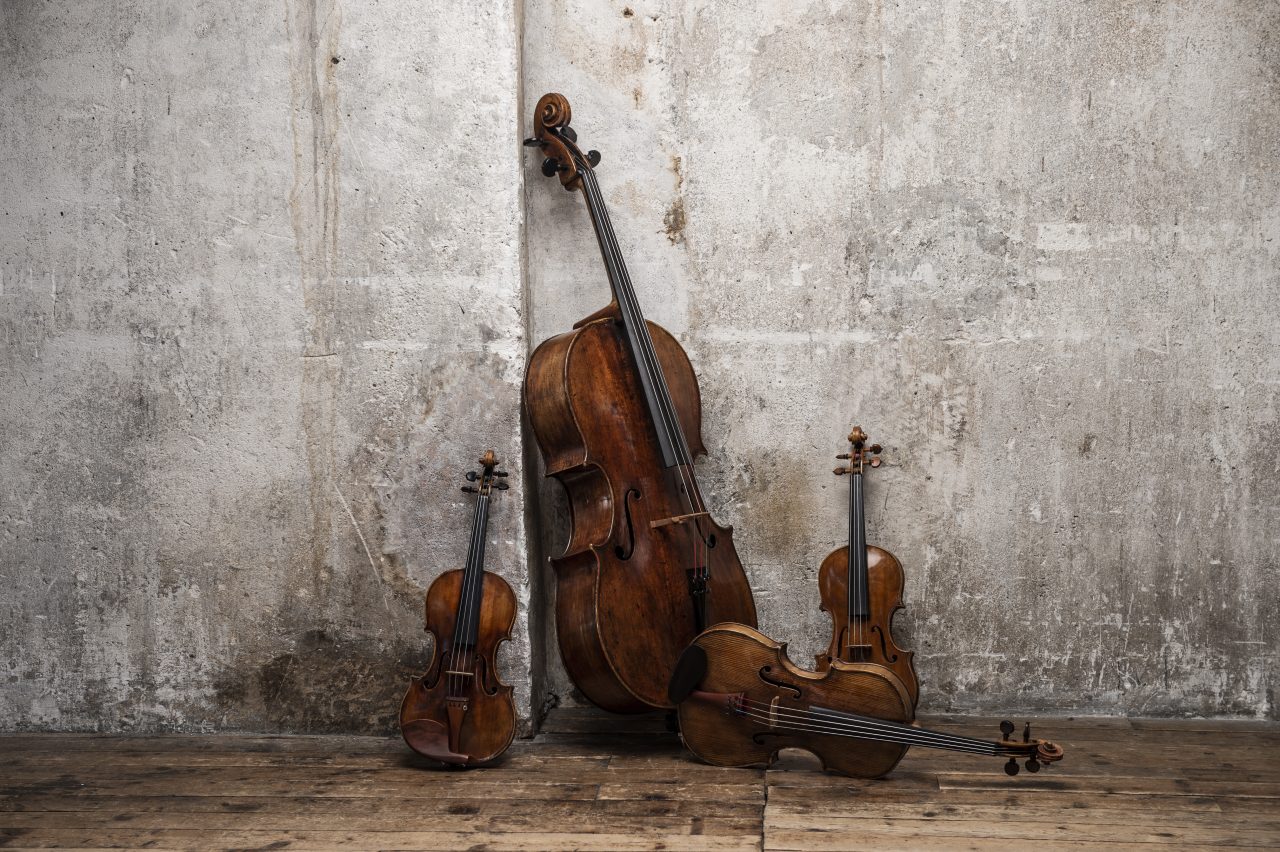
Two leading French quartets from successive generations join forces in George Enescu’s remarkable Octet: Quatuor Arod and Quatuor Danel. It is Enescu’s first truly large-scale composition—a monumental work of around forty minutes in which he develops the eight string parts with extraordinary detail.
Unlike Mendelssohn’s famous example, there is no solo line with accompaniment here. The eight voices are in constant dialogue, alternately taking the lead, creating a rich, symphonic and blended sound that at times recalls Brahms in its warmth and Mendelssohn in its energy. Enescu himself described the work as cyclical: themes return in all movements, as if woven throughout the entire piece.
The four movements each have their own character, yet can also be understood as one large whole. After the grandly conceived opening movement, with subtle traces of Romanian folk music, comes an explosive, fugal second movement, a mysterious and nocturne-like slow movement, and finally a sensual, turbulent waltz in which earlier themes come together.
The complexity of this large-scale structure made the composition a real challenge, but the result is a compelling and visionary early work: an epic piece in which late-Romantic expression and forward-looking polyphony merge into an impressive musical whole.
Quatuor Arod opens the concert with Joseph Haydn’s String Quartet Op. 76 No. 1.
Programme
Joseph Haydn – String Quartet in G major, Op. 76 No. 1
George Enescu – String Octet in C major, Op. 7
Performers
- Quatuor Arod More information quatuorarod.com/en
- Quatuor Danel More information www.quatuordanel.eu