

Performers
- Shavkat Matyoqubov, koushnai & dutar
- Fu Xixu, pipa
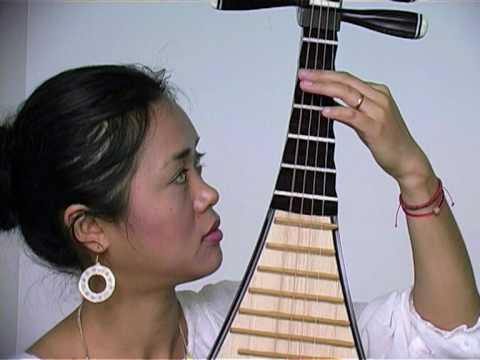 Lan Weiwei demonstrates the pipa
 Read more about the instruments
The pipa is a four-stringed Chinese lute with a pear-shaped body. Pipa was a general term for the plucked instruments played in hand positions with the outward finger technique of the right hand called "pi" and the inward finger technique called "pa. The pipa has a history of more than 2,000 years, from the Han Dynasty to the Tang Dynasty. The short, curved neck has 30 frets that extend to the soundboard, offering a wide range. The frets are made of ivory, wood, jade or bamboo. The pipa has four strings tuned A, d, e, a. With the instrument sitting vertically on your lap, it is played with imitation nails. This gives more freedom to perform various techniques, including: pitch-bends, tremoli and continuous strumming of the strings with four fingers. The pipa is the most expressive of Chinese plucked instruments. Chinese people have loved the music for centuries, and there is an extensive repertoire of pipa music passed down from generation to generation by individual musicians and scholars.